
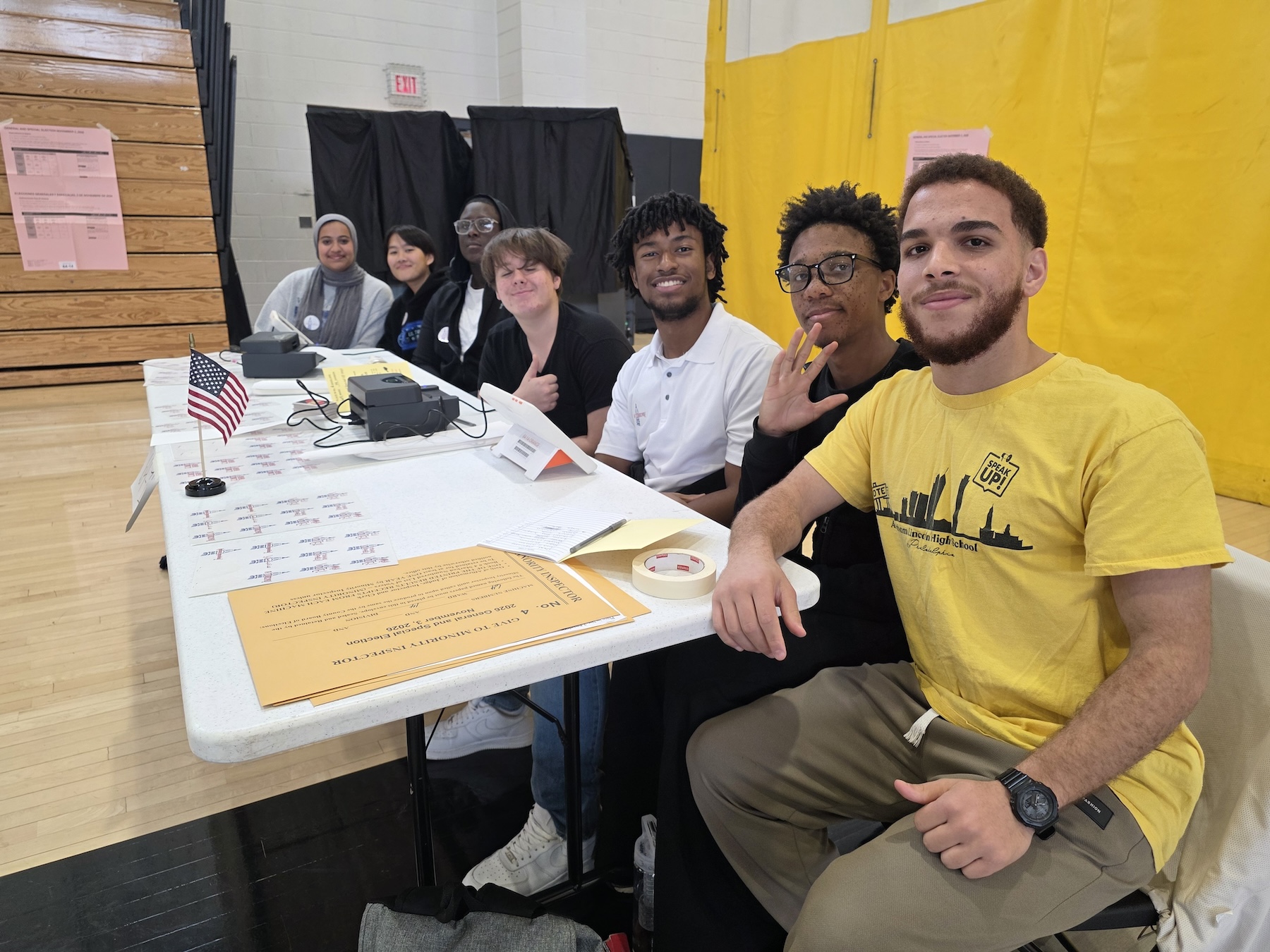
Election Day means no school for the Philadelphia district, but this year, more than 100 students from Lincoln High School in Mayfair showed up at 6 a.m. to work the polls.
The youth poll worker effort began in 2022 with eight students with learning disabilities. The number of students had grown to 35 when WHYY News visited for the 2024 primary election, and now, there are three times as many.
Over the years, as students recruited friends and alumni returned for the day, the teen takeover of Lincoln’s polling site has become a beloved school tradition.
Science and special education teacher Sarah Caswell leads the workers and said inclusivity has been key to growing their ranks. The students cover every imaginable ability, grade point average, language, culture and political affiliation, or lack thereof, she said.
Caswell said that during the school day, students are often separated by academic ability level, honors and Advanced Placement, deaf and hard of hearing, autistic support, general education and other categories.
When working the polls, those differences melt away, Caswell said.
“When they come here, they’re just students, they’re just children, and they’re all working together at a table accomplishing a job,” she said.
Back in 2022, she recruited a few 17- and 18-year-olds at the request of local ward chairs, who were having trouble finding enough poll workers as pandemic-era restrictions began to lift. Eight students agreed, but it was a hard day, with long hours in a stuffy room that had no air conditioning, she said.
After that first time, Caswell vowed to never do it again — but one student, Jibril Graves, immediately asked about working the next election, and it just kept going. Years later, the cohort of trained poll workers has become ingrained in school culture, Caswell said.
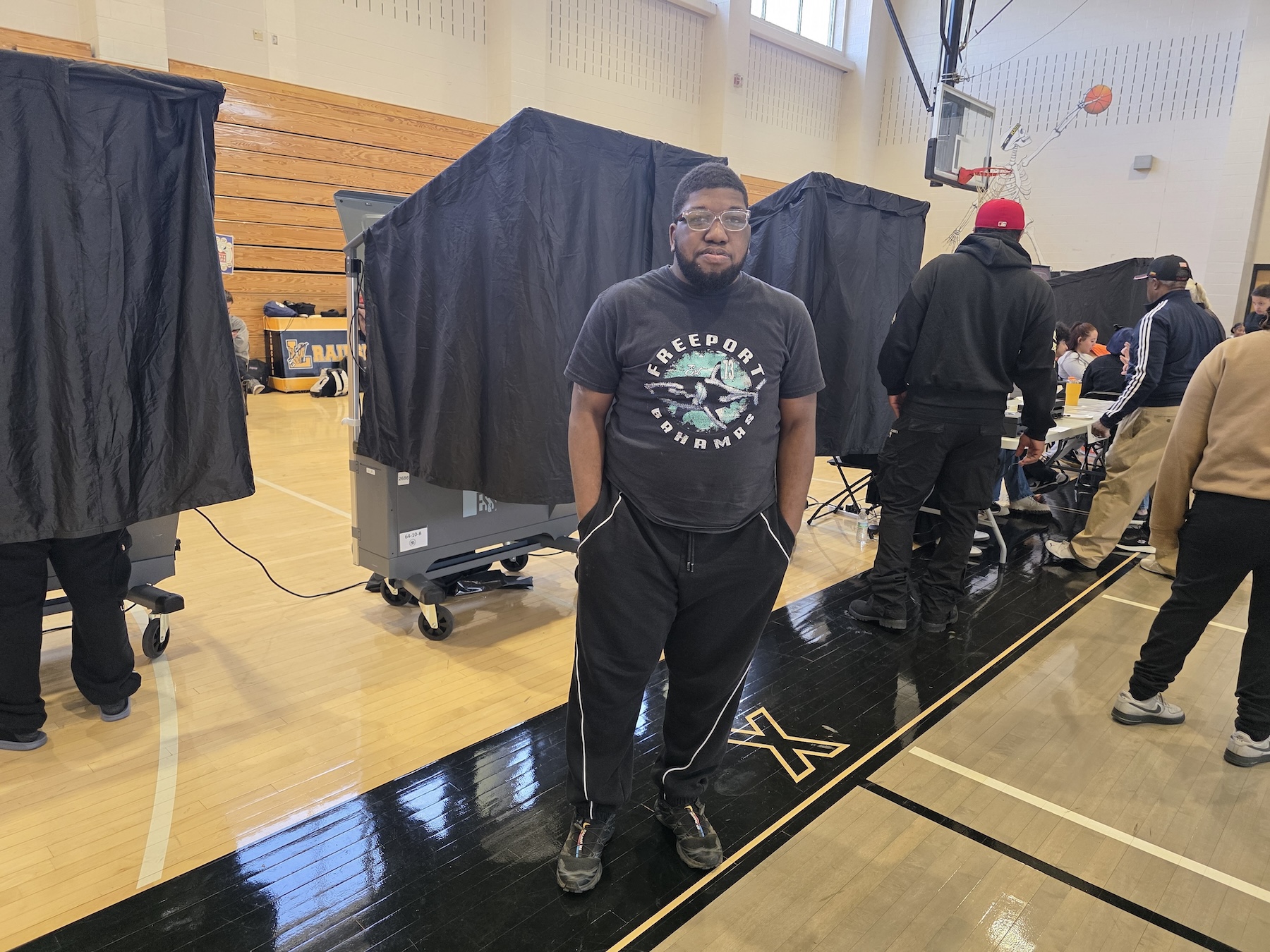
She said the opportunity to work the polls, have pizza with friends and earn a $280 paycheck has become a motivator for Lincoln students’ attendance and behavior. “I’m not spending my day off with clowns, that’s what I tell them,” Caswell said.
The day’s wages help many students afford senior dues and prom outfits while providing a supervised social opportunity and work experience. From handing out “I Voted” stickers to checking registrations, each person has a role, and no one is limited, regardless of ability.
Caswell said she hopes the youth poll worker movement will spread far beyond Lincoln.
Getting teens involved in elections, even if they cannot vote, helps them become comfortable in political spaces that often exclude them, she said.
Contrary to stereotypes, teens are actually interested in political issues, Caswell said. “I think many students feel very disenfranchised because these spaces don’t feel welcoming when you walk in and it’s all 80-year-olds in there.”


